Sealcoating is widely recommended as part of asphalt driveway maintenance, but homeowners often ask a fair question: Are there any negatives to sealing a driveway?
The honest answer is yes — there can be, depending on the condition of the asphalt, how the sealcoat is applied, and the materials used. Sealcoating is a protective maintenance layer, not a repair solution. When it’s used improperly, it can create problems instead of preventing them.
As someone who works with asphalt in Massachusetts climates, especially across North and Central areas like Worcester, Lowell, Leominster, Fitchburg, and Lawrence, we often see driveways that were sealed too early, sealed too frequently, or sealed without fixing underlying damage.
Understanding the potential downsides helps homeowners make better decisions about when sealcoating is actually beneficial — and when it isn’t.
1. Sealcoating Doesn’t Fix Structural Problems
One of the biggest misconceptions about sealcoating is that it repairs asphalt damage.
It doesn’t.
Sealcoat is simply a thin protective coating applied to the surface of the pavement. If a driveway already has structural issues beneath the surface, sealing it only hides the problem temporarily.
Common issues sealcoating cannot fix include:
- Deep cracking
- Base failure
- Potholes
- Severe asphalt fatigue
- Sink areas caused by drainage problems
In fact, sealing a damaged driveway without repairing it first can make the problem worse because water continues entering through cracks underneath the coating.
When cracks are present, the correct approach is professional driveway repair or asphalt patching before any sealing takes place.
2. Sealing Too Often Can Build Up Excess Layers
Another downside occurs when homeowners seal their driveway too frequently.
Some contractors push annual sealcoating, but in most residential situations that isn’t necessary.
When sealcoat is applied repeatedly without proper cleaning or surface preparation, it can create a thick buildup of layers that begins to flake or peel over time.
This is sometimes called sealcoat delamination.
Instead of bonding to the asphalt, new layers begin bonding to older, weaker layers — eventually causing the surface to break apart.
In Massachusetts climates, sealing every 2–3 years is typically the most effective schedule for residential driveways.
3. Poor-Quality Sealcoat Materials Wear Out Quickly
Not all sealcoating products are the same.
Some lower-quality materials — particularly those used in DIY driveway kits or extremely low-cost contractor jobs — contain heavily diluted sealers.
These thin coatings may:
- wear off within a year
- fade quickly
- provide little protection against water
- leave uneven surfaces
When inferior sealers fail prematurely, homeowners sometimes assume sealcoating itself doesn’t work, when in reality the issue was the material quality.
Professional-grade commercial sealers contain stronger binders and additives that help them withstand traffic and weather.
4. Slippery Surfaces Immediately After Application
Fresh sealcoat can be temporarily slippery, especially if it gets wet before it fully cures.
This is most noticeable:
- during the first 24–48 hours
- on steep driveways
- during rainy weather
While this usually resolves after the coating fully cures, it’s one reason why proper drying time is critical before allowing vehicles back on the surface.
Experienced contractors control this by:
- applying thin, even coats
- allowing adequate curing time
- monitoring weather conditions
5. Sealcoating Can Trap Moisture in Damaged Asphalt
If a driveway already has water trapped beneath the asphalt, sealing the surface may lock that moisture inside.
This can happen when:
- cracks were not properly repaired
- the base layer has poor drainage
- sealcoat is applied over damp pavement
When winter arrives in Massachusetts and temperatures drop, trapped water freezes and expands, leading to accelerated cracking.
That’s why professional preparation always includes:
- crack sealing
- proper cleaning
- ensuring the pavement is completely dry
Skipping these steps is one of the biggest reasons sealcoating sometimes fails.
6. Sealcoating Doesn’t Last Forever
Some homeowners expect sealcoating to be a long-term fix that lasts many years.
In reality, sealcoat is a temporary protective layer, not a permanent solution.
Factors that wear it down include:
- snow plow blades
- winter road salt
- UV oxidation
- vehicle traffic
- freeze–thaw cycles
In New England climates, most residential sealcoating lasts about 2–3 years before it needs to be reapplied.
Understanding this helps set realistic expectations about maintenance.
7. Incorrect Application Can Damage Asphalt Appearance
Poor application techniques can leave a driveway looking worse than before.
Common mistakes include:
- thick uneven layers
- squeegee streak marks
- overspray on walkways or garage doors
- puddling in low spots
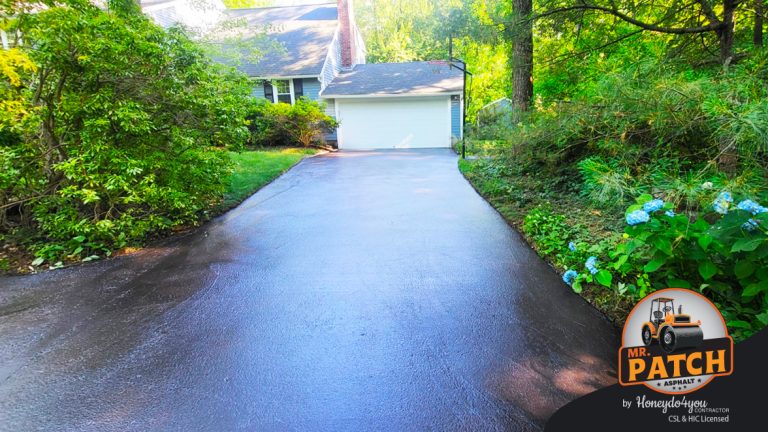
When applied properly, sealcoating should leave a smooth, uniform black finish.
Achieving that result requires correct material mixing, proper spreading methods, and the right weather conditions.
When Sealcoating Actually Makes Sense
Despite these negatives, sealcoating remains one of the most effective maintenance steps for asphalt driveways when used appropriately.
It works best when:
- the asphalt is structurally sound
- cracks have been repaired first
- the driveway is at least 6–12 months old
- professional materials are used
- proper curing conditions are available
Under these conditions, sealcoating protects the pavement from oxidation, water infiltration, and surface wear.
Situations Where Sealcoating Is NOT Recommended
There are also times when sealing a driveway simply isn’t the right solution.
Sealcoating may not be worthwhile if the driveway has:
- widespread cracking
- deep potholes
- severe edge deterioration
- major base failure
- large areas of crumbling asphalt
In these cases, repairs or resurfacing are usually more effective than simply applying a new coating.
The Real Key: Proper Preparation
Most of the negatives associated with driveway sealing come down to poor preparation and unrealistic expectations.
When sealcoating is treated as a maintenance step — not a shortcut for repairing damage — it performs exactly as intended.
A properly maintained asphalt driveway in Massachusetts can last 20–30 years when it receives:
- early crack repairs
- occasional patching
- periodic sealcoating
- proper drainage
Skipping these steps is usually what shortens pavement life.
FAQ: Driveway Sealcoating Concerns
No. Sealcoating is beneficial when applied correctly, but sealing damaged pavement without repairs can hide problems instead of fixing them.
Yes. Applying sealcoat every year can cause layer buildup that eventually flakes or peels.
Sealcoating itself does not damage asphalt, but poor-quality materials or improper application can create surface problems.
While not strictly required, sealcoating significantly slows oxidation and helps extend the life of asphalt pavement.
Peeling usually occurs when sealcoat is applied over dirty pavement, over old layers, or when low-quality materials are used.
Cracks should always be repaired first. Sealcoating should only be applied after crack filling or patching.
Final Thoughts
Sealcoating has a strong reputation in the asphalt industry because when it’s done correctly, it works.
However, it’s not a miracle fix, and it shouldn’t be used to hide underlying pavement problems.
The real key is understanding when sealcoating is appropriate and ensuring the driveway is properly prepared before application.
For homeowners in North and Central Massachusetts, maintaining asphalt against freeze-thaw cycles, snowmelt, and road salt requires a balanced approach: repairs when needed and sealcoating at the right intervals.
That combination is what keeps driveways lasting decades instead of failing prematurely.